
Running a Sex Offender Check in Wahkiakum County
Start a Wahkiakum County sex offender check at the Wahkiakum County Sheriff's sex offender information page. It explains the local notification role and routes the public to Washington's statewide registered sex and kidnapping offender search. That statewide tool is the main public name, county, address, and map channel. The Wahkiakum County Sheriff's Office remains the right local contact for registration appointments, address changes, reporting duties, and suspected noncompliance.
Gather a name spelling or a place before searching. Place tools can include Cathlamet, a ZIP code, Wahkiakum County, or an address with a portal-provided radius. Read the result as a public-notification record, not as a full criminal history or a forecast of conduct. A profile may show a relevant conviction and registration facts, while the court file holds the full case record.
Note: A registry result reports a legal registration and notification status; it does not decide a new charge or predict future conduct.
Wahkiakum County Registry Search Paths
Two official layers serve different needs. The county page gives local context and the sheriff's contact route. The statewide site supplies the actual search controls and public profiles. Wahkiakum County does not publish a separate county-only registry database, mobile app, or email-alert tool in the reviewed official sources. That makes the county landing page, statewide search, and a direct sheriff call the documented local chain.
The search is broader than a list of Cathlamet residents. Wahkiakum County includes rural and unincorporated areas, so a city-only query can miss records that a county filter or address-radius search may reveal. Try more than one lawful search method. If the map and text differ, rely on the detail the agency actually publishes and ask WCSO about a registration concern rather than inferring an exact home from a marker.
Searching the Washington State Sex Offender Information Center
Washington's public search is managed through the Washington Association of Sheriffs and Police Chiefs, with information supplied through registering law-enforcement agencies. Use the statewide registered sex and kidnapping offender search reached from the county page. Its public scope is set by Washington notification law, so a search is not a private master list. Follow the site's conditions, keep the search tied to safety and awareness, and compare the profile's status and last update before drawing conclusions.
- Open the official search from the Wahkiakum County page and read the use warning.
- Enter a name, or choose an address, Cathlamet, ZIP code, county, or radius search supported by the form.
- Review the list or map without treating a marker as a precise address beyond the published detail.
- Open a likely profile and check risk level, compliance status, offense information, agency, and last verification date.
| Field Label | Type | Required | Notes |
|---|---|---|---|
| Name | Text | Optional | Use first and last name or the configured name tab |
| Address | Text | Conditional | Street, city, or ZIP for a geographic search |
| City / ZIP Code | Text or dropdown | Optional | Use Cathlamet or a five-digit ZIP |
| County | Dropdown | Optional | Select Wahkiakum for a county view |
| Radius | Dropdown | Conditional | Use a distance choice shown by the current portal |
| Map / List | View control | No | Switch between markers and a result list |
Wahkiakum County Level I Registry Gap
No result is not a countywide all-clear. Under RCW 4.24.550, Washington risk levels guide what may be disclosed and how far notice reaches. The statewide public site includes Level II and Level III registrants. A Level I person ordinarily has limited disclosure, though public statewide posting can occur when the person is out of compliance or lacks a fixed residence. Registered kidnapping offenders also appear under the statutory scheme.
This visibility rule is why a name may not appear even when a registration duty exists. Spelling, status, move timing, and the scope of public disclosure can also affect results. Do not treat absence as proof. For a concrete local compliance concern, give WCSO the facts you observed and let the registering agency check its nonpublic records.
What a Registry Profile Shows
A public registry profile brings identity, appearance, registration, and offense fields into one record. Washington may publish an address at hundred-block granularity rather than a precise house number. That means the block is an area reference, not permission to select a particular door or lot. Read the agency, current status, and last verification together. An old photo or date should prompt a check with WCSO, not a guess about where someone is now.
| Name & Aliases | Published legal name and other names linked to the registration record |
|---|---|
| Photo & Description | Current photograph when supplied, plus age or DOB display and physical traits |
| Address Information | Resident or transient status and location detail, often shown at the hundred block |
| Offense Information | Relevant offense, jurisdiction, conviction date, statute, or registration basis when supplied |
| Risk Level | Washington Level I, II, or III, which controls notification reach |
| Status & Verification | Compliance status, registering agency, last verification or update, and map information |
Some profiles may also show scars, marks, tattoos, vehicle data, school information, or a secondary address when law and portal settings allow it. Those fields are not guaranteed on every record. The profile reports statutory facts; it does not retry the past case or measure present intent.
Wahkiakum County Sheriff Registry Office
Statewide technology does not replace local registration work. WCSO registers people who live in Wahkiakum County and applies Washington risk-classification and notification rules. The sheriff is also the practical contact for an appointment, reporting schedule, address change, fixed-residence question, or report of suspected noncompliance. No official county source publishes a registration fee or a set verification schedule for every category, so confirm those facts with the office.
The WCSO sex-offender information page shows how Wahkiakum County routes the public from local guidance to the statewide system.
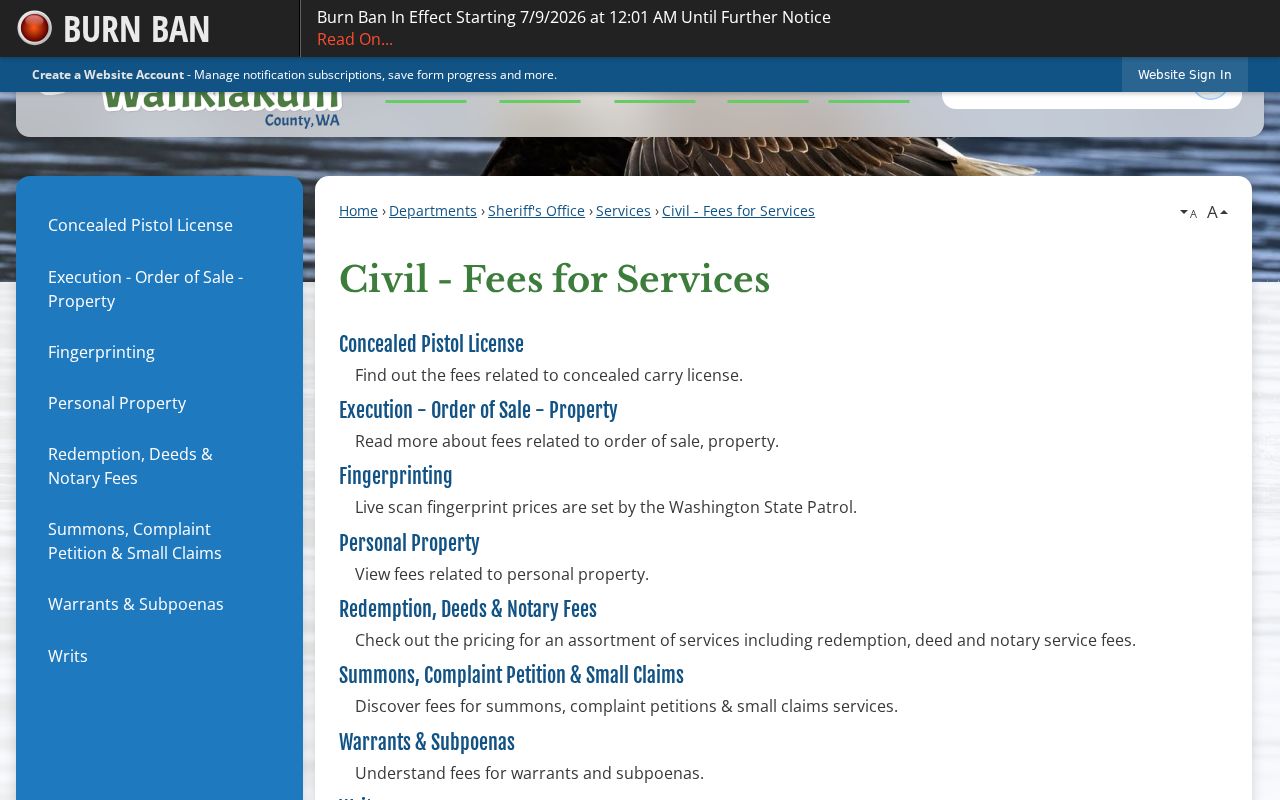
That local page is the best first stop before calling about a Wahkiakum County registration issue.
Wahkiakum County Sheriff's Office
64 Main Street
Cathlamet, WA 98612
360-795-3242
Call for registration appointments, reporting schedules, address changes, or noncompliance concerns.
Registration Requirements and Levels in Washington
Washington assigns risk levels I, II, and III through the registering law-enforcement agency. These levels describe assessed risk and guide disclosure. They are not federal SORNA tiers, and they do not set the registration term. Duration instead follows the conviction, offense classification, history, conviction date, and petition rules in RCW 9A.44.140. The law contains ten-year, fifteen-year, and lifetime frameworks, but no end date should be calculated from a public risk label alone.
| Washington Level / Status | Duration | Public Visibility |
|---|---|---|
| Level I, low | Offense-based, not level-based | Usually limited; public posting for no fixed residence or noncompliance |
| Level II, moderate | Offense-based, not level-based | Statewide site; notice may reach relevant community groups |
| Level III, high | Offense-based, not level-based | Statewide site and public-at-large notification |
| Kidnapping registrant | Statute and conviction control | Included on the statewide website |
Level III public data can include the person's name, relevant convictions, photograph, physical description, and hundred-block address. Level II disclosure may extend to schools, care providers, libraries, relevant groups, and neighbors. Ask WCSO about the current check-in duty for a specific lawful matter because the reviewed county sources do not publish one schedule that fits all registrations.
Wahkiakum County Cross-State Registry Search
The Columbia River setting makes a national check useful when a safety search crosses a state line. The U.S. Department of Justice National Sex Offender Public Website, or NSOPW, searches participating jurisdictions through one national interface. Use it as a second layer after the Washington search. NSOPW can widen coverage, but each participating jurisdiction controls its own source data and public disclosure rules.
The official NSOPW search source provides the national starting screen used for cross-state registry checks.
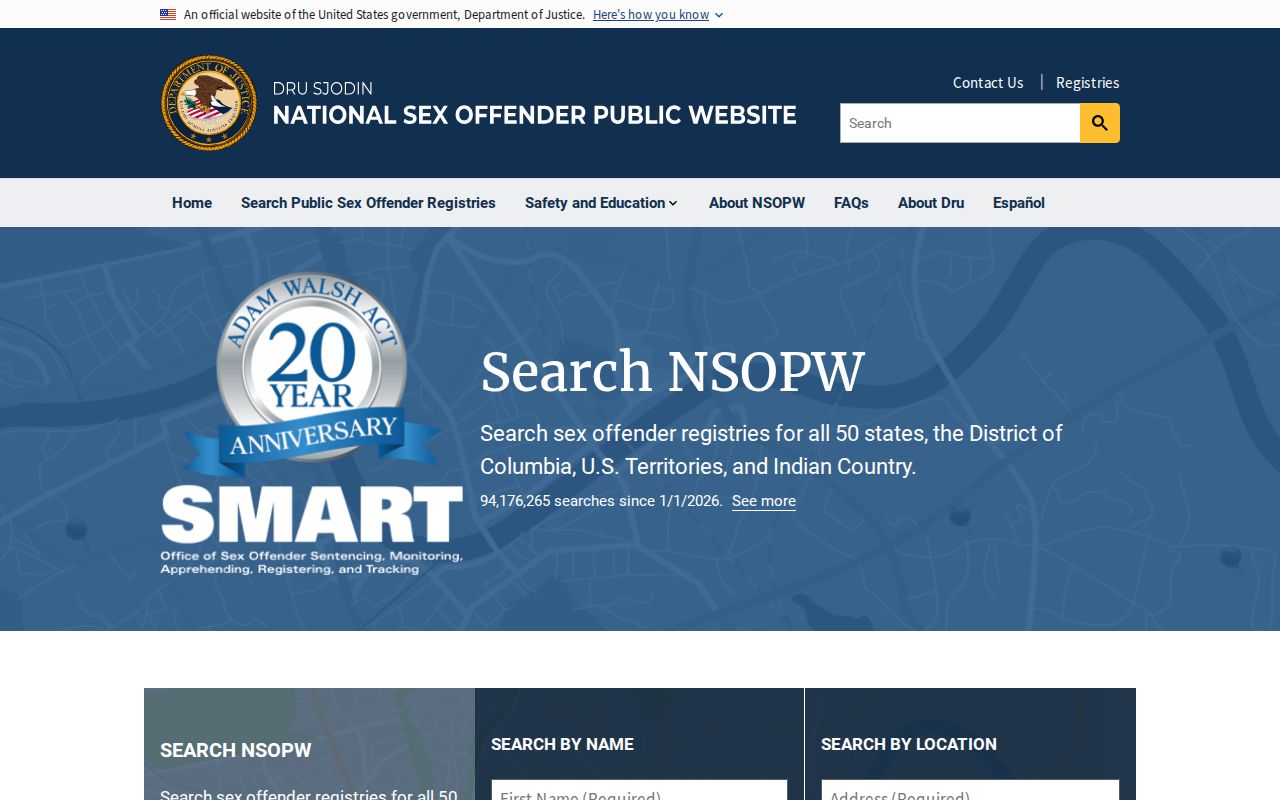
A national no-result response still does not override Washington's visibility limits or replace a call to the registering sheriff.
Search both the name and a relevant place when the interface permits. Captcha or terms may apply. If results conflict, compare the source jurisdiction, status, and update date, then contact that listed agency. WCSO can answer a Wahkiakum County compliance question, but it does not control another state's record.
Wahkiakum County Registry Duration Rules
A risk label and a registration term answer different questions. The level guides how the sheriff gives notice. RCW 9A.44.140 sets duration and routes for relief based on the legal record. A Level I label does not itself mean ten years, and a Level III label does not by itself prove a lifetime term. The offense, class, prior history, judgment, and controlling subsection matter.
Someone reviewing their own Wahkiakum County registration should start with the judgment and current sheriff record, then read the statute that applies to the conviction date. Petition rules may require court action. The public profile is not an end-date calculator, and a profile disappearing from public view does not by itself prove the underlying duty ended.
Note: Risk level controls notification reach, while the conviction and statute control duration; do not swap one rule for the other.
Lawful Use and Community Notification
Registry access supports personal, family, and community safety. It can help a reader understand published risk information, identify the agency responsible for a registration, and raise a focused compliance concern. Washington's disclosure law gives Level III notices the broadest public reach, while Level II and Level I information follow narrower rules. The public should not expand a notice beyond what the agency has chosen to disclose.
Use registry information lawfully: RCW 4.24.550 governs public disclosure for community protection; it does not authorize harassment, threats, intimidation, trespass, or vigilantism. Conduct that violates criminal law remains a crime, regardless of information found in a registry.
Call 911 for an immediate threat. For a registration or compliance concern that is not an emergency, call WCSO at 360-795-3242. Give facts such as the location, date, and observed issue. Do not confront a person, visit a published block to investigate, or share an unsupported claim. The sheriff can compare the report with registration records that are not open to the public.
Note: Verify status and last-update fields with the listed agency before relying on a registry profile for a personal safety decision.